If you've ever squeezed onto a London Underground train at rush hour or navigated Tokyo's bewildering station hierarchies, you'll understand the peculiar luxury of commuting in Canberra. Our city's transport experience is fundamentally different—and that difference starts with the city's foundational design philosophy.
When Walter Burley Griffin drafted Canberra's master plan in the 1910s, he envisioned a capital built around space rather than density. That vision persists in our commuting patterns today. The ACTION bus network, operated by the ACT Government, covers 73 routes across 2,358 square kilometres—a coverage that would be impossible in compact European cities. A single ticket costs around $3.50, yet buses serve neighbourhoods like Woden, Belconnen and Tuggeranong with frequencies that match inner-city standards elsewhere.
The real revelation comes when you consider what Canberra deliberately chose not to build. While Sydney, Melbourne and Brisbane invested heavily in rail networks, Canberra maintained an integrated bus system that prioritises flexibility over fixed infrastructure. This isn't a limitation—it's strategic. Our buses navigate wide boulevards and purpose-built transit corridors like the impressive light rail connection between Gungahlin and the city centre, opened in 2019. Compare this to cities where century-old rail networks constrain development and inflate operational costs.
Cycling infrastructure here operates at a scale few world capitals achieve. The National Capital Authority maintains over 300 kilometres of bike paths, many separated from traffic entirely. The route along Lake Burley Griffin from Commonwealth Park to the Australian National University is arguably unmatched globally for accessibility and safety. For a city of roughly 450,000 people, this infrastructure investment reflects a distinctly Canberran commitment to multimodal transport.
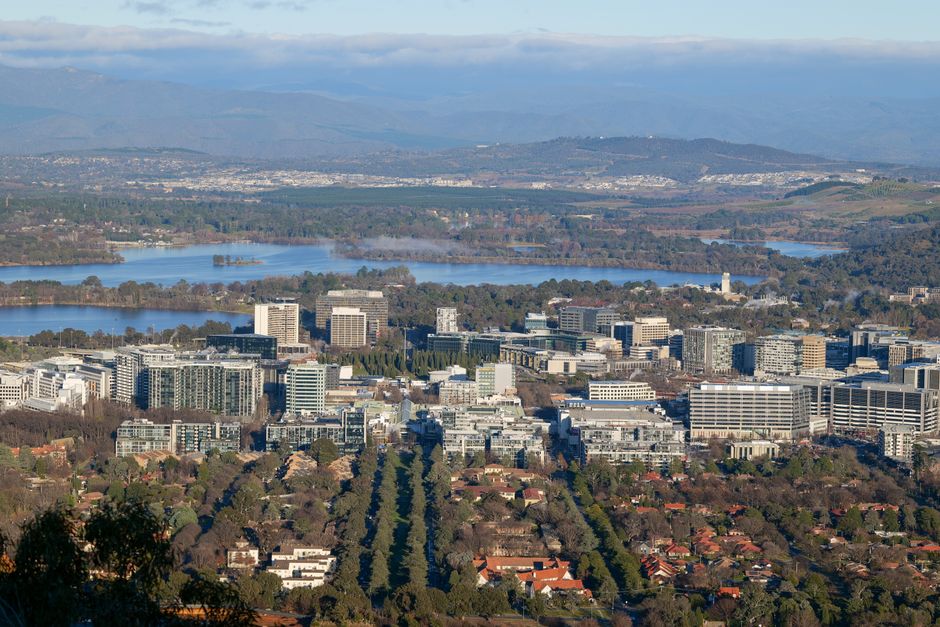
Perhaps most distinctively, Canberra's geographic spread—with employment, education and shopping distributed across multiple centres rather than concentrated in a CBD—creates a fundamentally different commuting dynamic. Someone living in Queanbeyan might work in North Canberra; another might reverse-commute from the city centre to Woden. This dispersal reduces the bottleneck congestion that cripples cities with monocentric designs.
The trade-off is obvious: you'll never experience Canberra's public transport efficiency without understanding its car dependency. Yet visitors from congested global capitals often remark on the same phenomenon: here, you can move. A 20-minute bus ride from Civic to the suburbs feels spacious, predictable and human-scaled. It's the transport rhythm of a planned city—and in our hyper-urbanised world, that distinction matters.
This article was compiled by AI and screened before publishing. See our editorial standards.