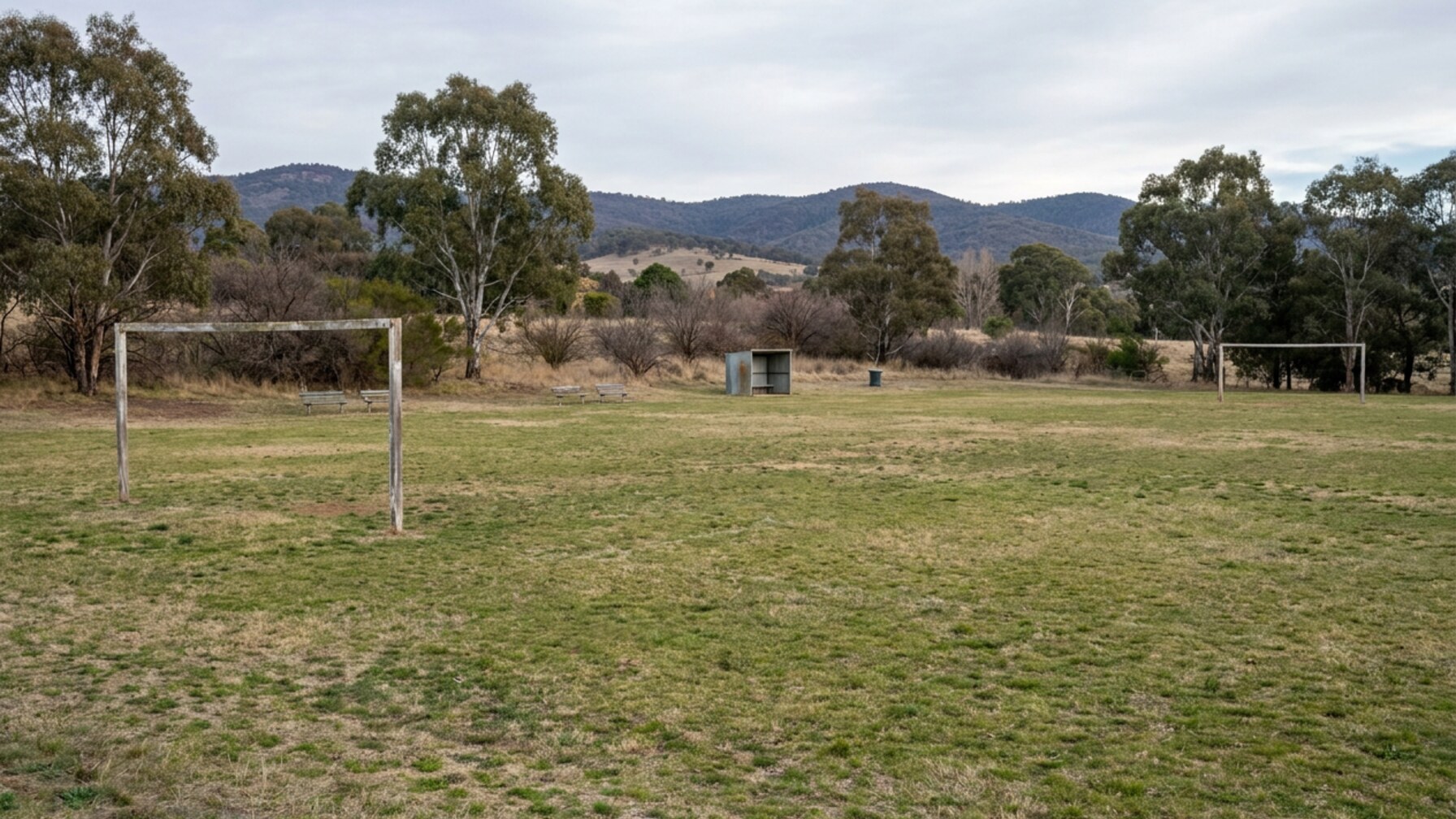
The most popular amateur sports in Canberra aren't always the ones that make the evening news. A review of 2025-26 registration data provided by Capital Sport, the territory's peak community sport body, shows that soccer, netball and touch football account for more than 12,500 registered participants across the region's senior amateur leagues.
That figure, drawn from the annual participation audit released last month, represents a 6.2 per cent increase over the previous year and continues a steady upward trend that began after 2022. At a time when national sport-for-all funding faces a 3 per cent real cut under the latest Commonwealth budget, Canberra's amateur sport system appears to be moving in the opposite direction.
Where the numbers come from
Capital Sport collects registration data from 17 affiliated league organisers, including the Canberra Region Rugby League, the ACT Netball Association, Capital Football and the ACT Touch Football Association. The audit captures everyone who registered for a senior amateur competition between 1 October 2025 and 30 September 2026. That window covers winter and summer seasons for most codes.
The data breaks down participation by age group, gender and postcode. Among the findings: the 25-34 age bracket now accounts for 41 per cent of all amateur league players, up from 36 per cent in 2019. The 35-44 cohort grew by 9 per cent year-on-year, a rise officials attribute partly to the expansion of mixed-gender competitions at the Lyneham and Tuggeranong indoor sports centres.
But the raw numbers tell only part of the story. When you compare them to the Australian Sports Commission's 2023-24 National Sport and Physical Activity Survey, the gap between participation and facility capacity becomes visible. The survey found that 47 per cent of Canberrans aged 18-64 say they'd like to play more organised sport but cite lack of time or lack of suitable competition times as the main barrier. The registration data suggests many do find a way, but not without strain on existing venues.
What the numbers say about fitness culture
Canberra has long branded itself as the 'bush capital' with a reputation for weekend trail running and mountain biking. The amateur league data adds a different dimension: a city that walks, runs and cycles for transport but reserves its evenings for club competition. Touch football alone accounts for 4,200 registered players across the ACT, making it the third-largest senior amateur code behind soccer (5,800) and netball (4,900).
What's striking is the social composition. Participation in mixed-gender leagues grew 14 per cent year-on-year, a rate almost double the overall average. That shift is most pronounced in touch football and indoor cricket, both of which now run dedicated mixed divisions on Thursday and Friday nights at the Canberra Indoor Sports Centre in Mitchell and the YMCA facility in Belconnen.
The data also shows that postcode matters. The 2601 postcode, covering the inner-north suburbs of Braddon, Reid and Turner, recorded the highest per-capita participation rate at 38.3 registrations per 1,000 adults. The southern suburbs of 2905 (which includes Calwell and Chisholm) recorded the lowest, at 18.7 per 1,000, underscoring the geographical unevenness in access to evening floodlit fields and clubrooms.
Capital Sport told The Daily Canberra that the 2027 audit, due for release in October next year, will include the first longitudinal analysis of five-year trends. That data, combined with the upcoming ACT Government recreation infrastructure master plan expected before the end of 2026, will determine whether the current trajectory is sustainable, or whether the city's appetite for amateur competition is outpacing its ability to keep the lights on.