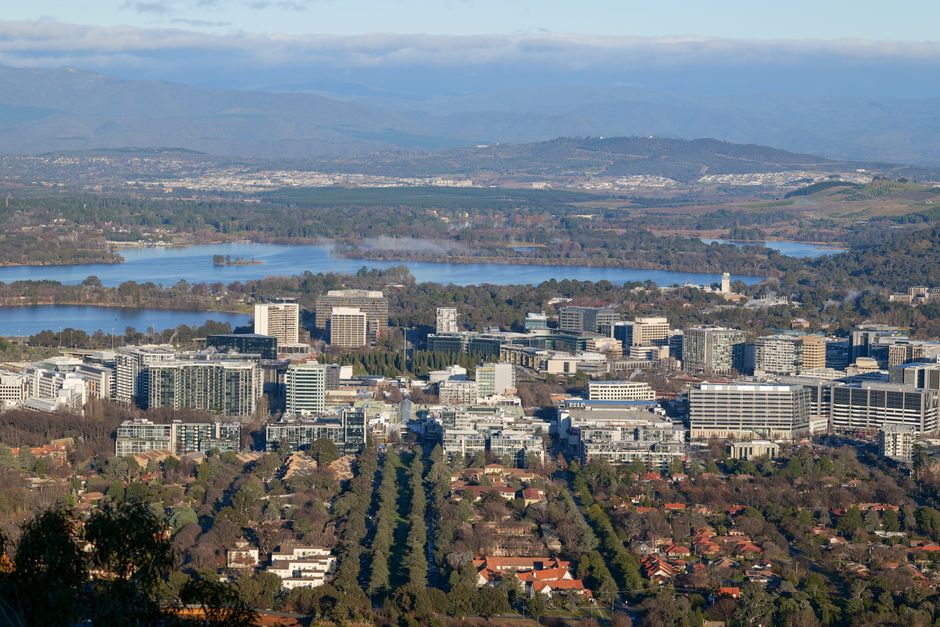
Canberra's struggling central business district has received a significant boost with planning authorities approving a major mixed-use development that promises to reshape the city's urban core and address chronic undersupply in the rental market.
The ACT Planning and Land Authority has granted development approval for a $280 million, 28-storey tower on City Walk—a site long earmarked for intensification but stalled by economic headwinds and financing challenges. The project will deliver 400 apartments across a mix of one, two and three-bedroom units, complemented by 2,500 square metres of ground-floor commercial and retail space.
The approval marks a turning point for Canberra's CBD, which has struggled with low foot traffic and high vacancy rates in recent years. The city's median house price hovering near $835,000 has pushed younger professionals and key workers into rental markets, yet apartment stock in the CBD remains constrained. The development is expected to ease pressure on inner-city rents and provide an alternative to sprawling outer suburbs like Gungahlin and Belconnen, where new estates continue to absorb buyer demand.
"This approval signals confidence in the CBD's future," said a spokesperson for the ACT Government's planning directorate. The developer has committed to ground-floor activation, with designs featuring cafés, retail tenancies and public spaces fronting Bunda Street and City Walk—critical elements in reversing the precinct's perception as a nine-to-five office district.
The project incorporates 300 car parking spaces and bicycle facilities, addressing longstanding infrastructure concerns. It also includes 15 per cent affordable housing, reflecting ACT Government requirements. Construction is expected to commence in early 2027, with completion anticipated in 2030.
Industry observers note the timing coincides with stabilising interest rate expectations and renewed investor appetite for purpose-built rental stock. With current auction clearances across the territory hovering around 65 per cent and competition for inner-ring properties intense, the CBD tower offers developers a hedge against outer-suburb saturation.
The approval is not without conditions. The developer must deliver a public plaza linked to the adjacent National Convention Centre precinct, upgrade pedestrian connections to Constitution Avenue, and comply with strict ESD requirements including solar panels and water recycling systems.
Planning officials have flagged that this approval unlocks potential for neighbouring sites, with three additional development applications under assessment within a 300-metre radius of City Walk. Market watchers suggest the CBD could absorb 1,200 new apartments over the next decade without oversupply—a threshold that, if met, would meaningfully alter Canberra's residential geography.
This article was compiled by AI and screened before publishing. See our editorial standards.