News
Canberra Housing Densification: Global Lessons Explained
How Canberra's medium-density strategy in Gungahlin and Belconnen compares to Vancouver and Singapore—what's working, what isn't, and why local factors matter.
3 min read
News
How Canberra's medium-density strategy in Gungahlin and Belconnen compares to Vancouver and Singapore—what's working, what isn't, and why local factors matter.
3 min read
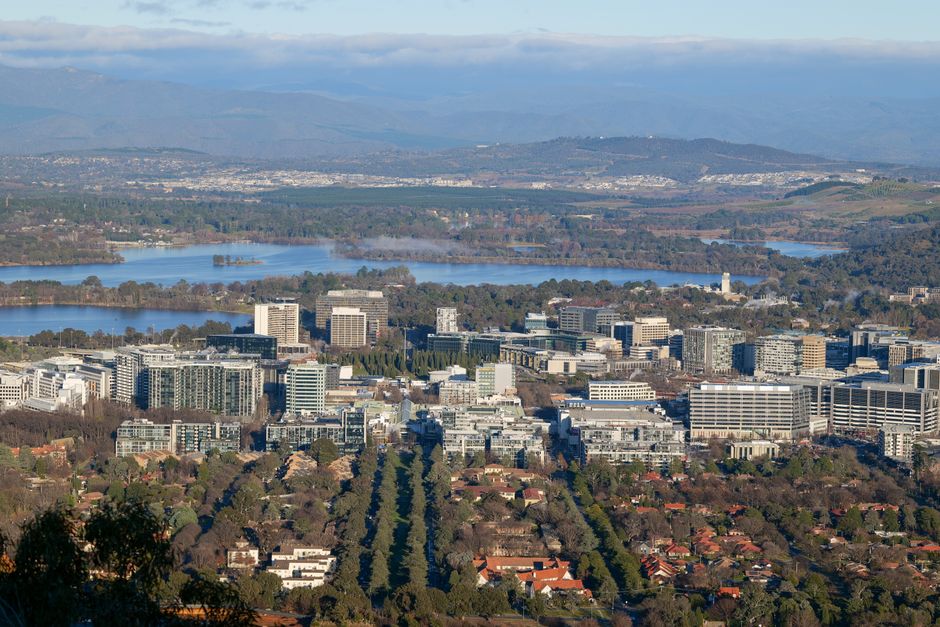
Canberra's ambitious infill housing strategy is reshaping the city's character at a pace that rivals some of the world's most aggressive urban densification efforts, yet early results suggest a distinctly local flavor to how the ACT capital is navigating the challenge.
The territory government's push to unlock medium-density residential zones across Gungahlin and Belconnen mirrors strategies deployed in Vancouver and Singapore over the past decade, but Canberra's comparatively smaller public service workforce and lower property values create a markedly different pressures than those cities faced.
Property analysts note that median house prices in Canberra's established suburbs hovered around $780,000 in mid-2026, while apartments in newly zoned areas average $550,000—significantly below comparable Australian cities. This affordability advantage, critical for attracting and retaining federal public servants, sits at the heart of the ACT government's densification logic.
The Light Rail Stage 2 debate illustrates how Canberra's approach diverges from global peers. While Singapore and Vancouver leveraged transit-oriented development before building rail networks, Canberra is constructing the infrastructure to justify density rather than the reverse. The proposed extension to Woden, contested by some residents, reflects tension between growth targets and community cohesion that planners in Vancouver's Eastside have managed by embedding local engagement earlier.
Ward boundaries remain contentious. The ACT government's recent expansion of development controls across inner-Gungahlin neighborhoods—including along Hibberson Street and near Ngunnawal shops—has prompted comparisons to Melbourne's ongoing medium-density rollout. Yet Canberra's greenfield alternatives in Whitlam and Casey offer a safety valve absent in truly constrained cities, complicating the urgency argument that drove Vancouver's zoning reforms.
International observers note Canberra's relative advantage: no equivalent to the speculative investment pressures that inflamed housing crises in Toronto or Auckland. The ANU and University of Canberra have published research suggesting public sector employment stability buffers the territory against the boom-bust cycles that plagued other Australian capitals during recent property booms.
Still, challenges mount. Unlike Singapore's centralized planning or Vancouver's regional coordination mechanisms, the ACT operates within federal constraints while managing suburban expectations shaped by Canberra's mid-century low-density design legacy. Community backlash over car parking requirements and tree removal on renovated sites along Belconnen's discovery corridor echoes resistance seen in Portland and Copenhagen—yet without those cities' established transit networks to absorb new residents.
By late 2026, early data suggested Canberra's densification was proceeding at roughly 3.2 percent annual growth—above pre-pandemic trends but below Vancouver's 4.5 percent peak. Whether this pace proves sustainable, and whether Canberra can avoid the service delivery and affordability contradictions that eventually emerged in other rapid-growth cities, remains the genuine test ahead.
This article was compiled by AI and screened before publishing. See our editorial standards.

News
News
News
News
About this article
Published by The Daily Canberra
Spread the word
Daily brief
Free, in your inbox before 7am. Weekdays.
The Daily Network — local news across Australia