Business
Canberra Quarries Cut 7% Material Loss With New Software
Real-time operations platforms are revealing hidden inefficiencies costing the industry millions annually in untracked waste.
3 min read
Updated 1 h ago
Business
Real-time operations platforms are revealing hidden inefficiencies costing the industry millions annually in untracked waste.
3 min read
Updated 1 h ago
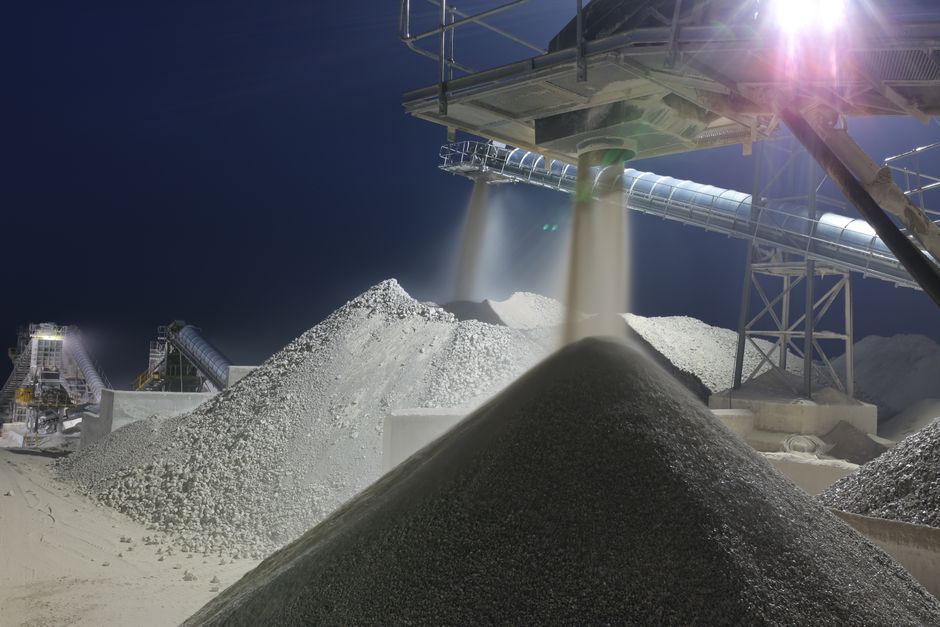
The Australian aggregates industry has a data problem. Not a shortage of data, but a surplus of disconnected data: production logged in one spreadsheet, blast designs in another, crushing records in a third, and dispatch in a system that does not talk to any of them. The result is a value chain that nobody sees whole, and a margin that leaks at every join.
Industry benchmarks put the typical saleable material loss across an aggregates operation at between 3 and 7 percent, attributable to unreconciled variances between what was moved, crushed, and shipped. The problem is not that operators do not know leakage exists. It is that without a connected operating picture, they cannot prove where it is happening or how much it costs in any given period.
The same disconnect applies to plant efficiency. Crushing plant OEE (overall equipment effectiveness, measured as availability times performance times quality) averages around 50 to 60 percent across the Australian industry, meaning that 40 percent or more of capacity is being left on the table through downtime, slow running, and off-spec product. Without a live OEE number computed per shift, that capacity loss is invisible until it shows up as a margin problem at month end.
Platforms designed to reconcile the quarry value chain in real time are changing how operators approach these problems. SiteLive's QuarryLive module, developed in partnership with Metromix, provides a single connected picture from extraction survey and blast design through crushing, stockpile valuation, dispatch, and concrete pour. Every input at one stage flows forward automatically. Every gap between what was moved and what was processed is flagged with a tonnage and a percentage the moment it appears.
The shift from monthly reporting to live reconciliation changes the nature of the decision that gets made. A 4 percent recovery gap caught on Tuesday can be investigated and corrected before the week closes. The same gap caught in a month-end spreadsheet is a historical fact with no operational remedy.
For construction project managers operating in the ACT and surrounding regions, the quality and traceability of aggregates supply has direct implications for project delivery. Firms like MNL Projects, led by Director Mitchell Smith and operating across ACT, QLD, and NSW, work with supply chains that depend on consistent, documented material flows from quarry to site. As technology platforms close the gap between extraction and delivery, the expectations placed on suppliers and project managers around data quality are rising accordingly.
The shift is gradual, but it is underway. For quarry operators, the question is no longer whether to connect their value chain digitally, but how quickly they can do it before the gap between them and their best-practice peers becomes a commercial liability.
This article was compiled by AI from the sources linked above and screened before publishing. See our editorial standards.

Business

Business

Business

Business
About this article
Published by The Daily Canberra
Spread the word
Daily brief
Free, in your inbox before 7am. Weekdays.
The Daily Network — local news across Australia