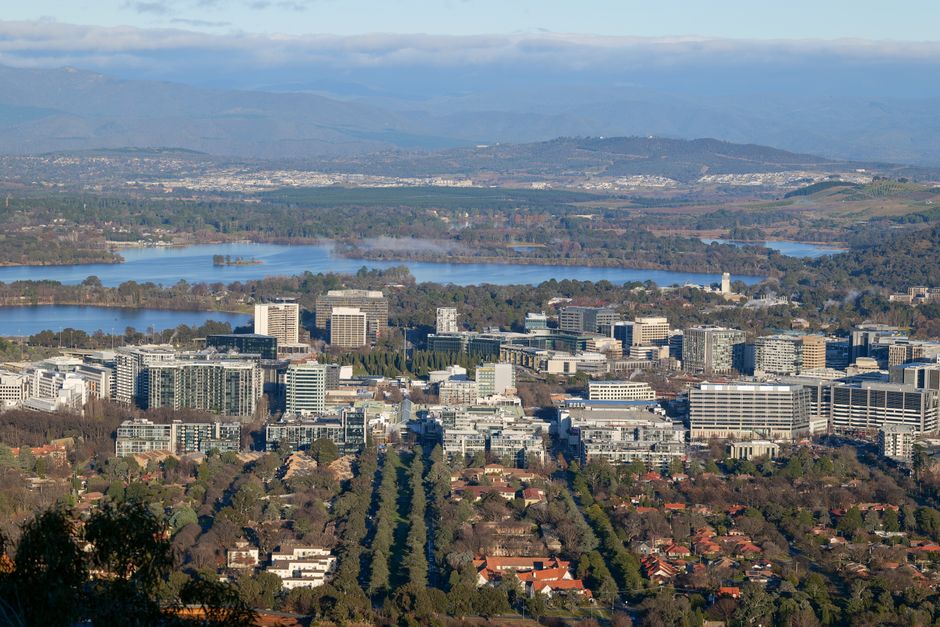
Canberra's commercial property market is sending mixed signals that reflect broader economic currents rippling through the nation's wealthiest households and institutional investors.
The latest data from commercial real estate trackers shows office vacancy rates in the City centre hovering near 12 percent—higher than the five-year average of 8.3 percent. Yet paradoxically, prime addresses along Commonwealth Avenue and in the Dickson precinct continue attracting investor interest. This apparent contradiction reveals how economic indicators operate at multiple levels simultaneously.
"What we're witnessing is capital flight from secondary office stock toward premium assets," explains the investment logic. Properties offering modern amenities, proximity to government agencies, and flexible workspace configurations command premiums, while older Class B stock languishes. The spread between prime and secondary yields—currently around 180 basis points—mirrors what's happening nationally.
UBS's recent wealth data showing Australia ranking third globally in median household wealth provides essential context. That accumulated capital seeks returns, and Canberra's office market represents a microcosm of where institutional money is flowing. Superannuation funds and REITs (Real Estate Investment Trusts) have shifted allocation strategies, favouring assets in Barton and Kingston over traditional CBD corridors.
Ground-level evidence supports this narrative. Rental rates for premium office space in Civic have stabilised around $320-380 per square metre annually—flat year-on-year, suggesting demand-supply equilibrium at the upper end. Meanwhile, secondary market rates have compressed by 3-4 percent, indicating price discovery in weaker segments.
The investment flow patterns also reflect workplace transformation. The prevalence of hybrid work arrangements means organisations require less total space but demand higher-quality environments. A government contractor occupying 5,000 square metres in 2019 might now occupy 3,200 in a newer, better-appointed building—reducing demand overall while concentrating it.
Capital values tell a complementary story. Premium office assets in Canberra's business precincts have appreciated 2.1 percent annually since 2021, underperforming the national commercial real estate index by roughly 1.2 percentage points. That gap reflects investor caution about Canberra-specific factors: public sector employment concentration, policy uncertainty, and limited diversification.
For investors monitoring economic health, these metrics matter. Office market dynamics historically correlate with confidence in professional services demand, government spending intentions, and corporate expansion plans. Canberra's moderated growth trajectory suggests measured optimism rather than exuberance—a pattern consistent with Australia's broader wealth concentration among existing asset holders rather than new wealth creation.
The commercial property lens reveals what headline wealth figures obscure: prosperity pools concentrate geographically and by asset class.
This article was compiled by AI and screened before publishing. See our editorial standards.