Federal
Why Canberra is the national capital: how the federal government shapes the city
From a line in the Constitution to the Parliamentary Triangle and the public service, the Commonwealth is woven into how Canberra was built and how it runs
Federal
From a line in the Constitution to the Parliamentary Triangle and the public service, the Commonwealth is woven into how Canberra was built and how it runs
Listen to this article · 3:49
Most Australian cities grew up around a port, a goldfield or a river crossing. Canberra is different. It exists because the nation needed a capital, and almost everything distinctive about the city flows from that single fact. If you live here, or you are about to move, understanding the federal layer makes the place far easier to read.
Canberra's existence is a compromise baked into the founding of the nation. When the colonies federated in 1901, Sydney and Melbourne both wanted to be the capital. Section 125 of the Constitution settled the rivalry by requiring that the seat of government sit in its own Commonwealth territory inside New South Wales, but at least 100 miles (about 160 kilometres) from Sydney. Melbourne hosted the Parliament while a permanent site was chosen.
After years of inspections and votes, the Seat of Government Act 1908 confirmed the Yass-Canberra district. The territory was transferred from New South Wales to the Commonwealth on 1 January 1911, and the new capital was officially named on 12 March 1913, the date Canberrans still mark as Canberra Day. Parliament finally moved from Melbourne to the building now known as Old Parliament House on 9 May 1927.
In 1912 the American architect Walter Burley Griffin, working with Marion Mahony Griffin, won the international competition to design the capital, chosen from more than 130 entries. Their plan is the reason Canberra feels unlike anywhere else: a geometric scheme of axes and circles laid over the Molonglo valley, with a central lake and sightlines aligned to the surrounding hills.
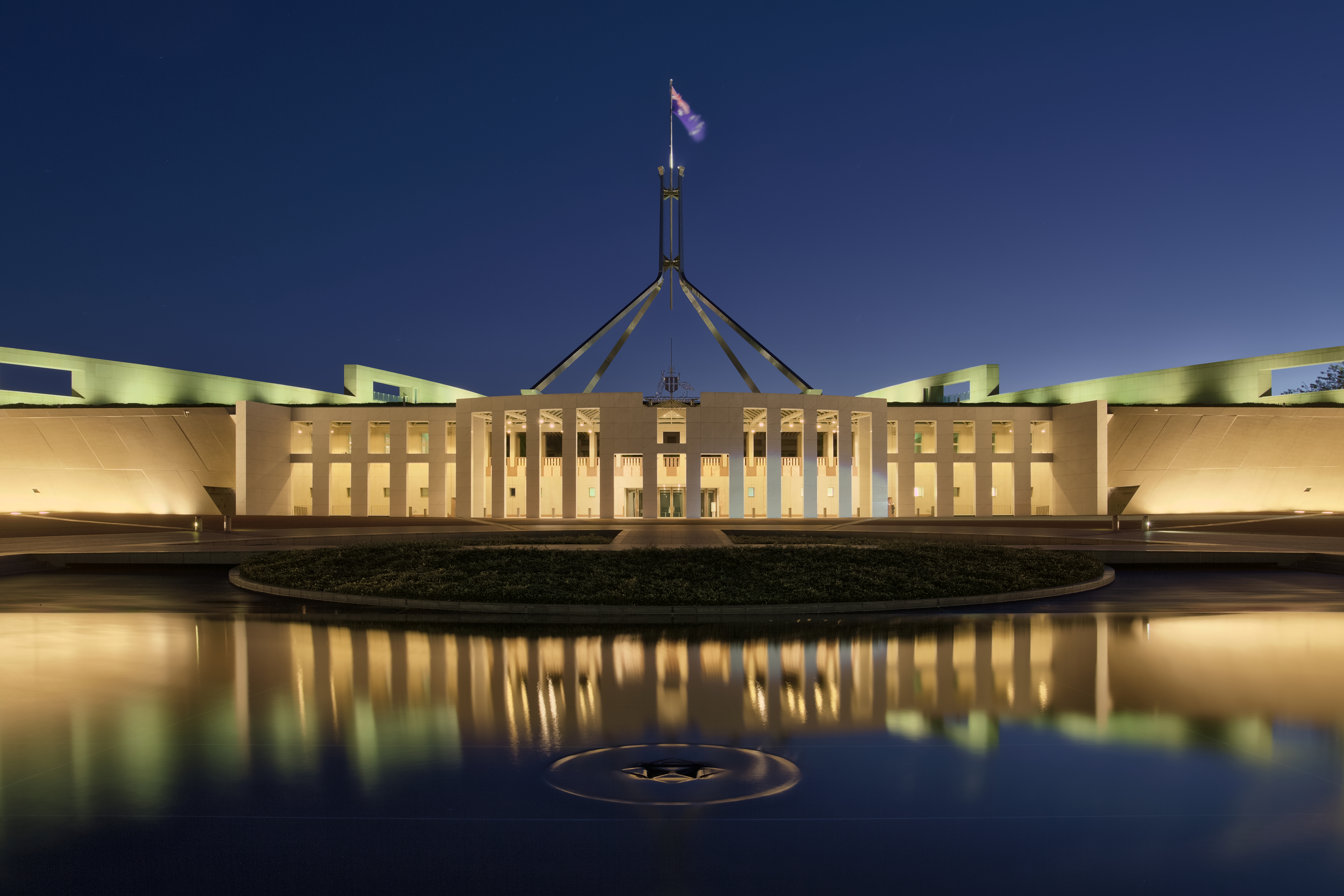
That design gave the city its signature feature. The land axis runs from Mount Ainslie across to Capital Hill, the water axis follows the line of the lake, and where they meet sits the Parliamentary Triangle, framed by Commonwealth, Kings and Constitution Avenues. It is no accident that Parliament House, the High Court, the National Gallery and other major institutions cluster here. The plan deliberately placed functions of national significance at the symbolic centre.
One quirk surprises many newcomers: Canberra has two planning authorities, not one. The ACT Government plans most of the suburbs, but the Commonwealth's National Capital Authority (NCA) controls the areas that matter to the nation as a whole.
The NCA administers the National Capital Plan and approves works within what are called Designated Areas, including the Parliamentary Triangle, the main approach avenues and the lake foreshores. Land in Canberra is also split into National Land, used by or on behalf of the Commonwealth, and Territory Land, managed by the ACT Government. That division is why the look and feel of the city centre, the diplomatic estate and the lake margins is shaped by a federal body rather than the local government.
The federal government is not just a tenant in Canberra. It is the largest force in the local economy. The Australian Public Service (APS) is the city's biggest employer, and Canberra holds the single largest concentration of public servants in the country.
According to the Australian Public Service Commission, about 70,000 APS staff were based in the ACT at 30 June 2025, making up roughly a third of the entire national APS workforce. That presence ripples outward into hospitality, construction, professional services and higher education. It also helps explain Canberra's rhythms, from the rush of estimates and budget season to the way the city empties a little during parliamentary recesses.
The federal footprint touches ordinary life in ways that are easy to miss. National institutions like the National Library, the National Museum and the Australian War Memorial are mostly free and sit minutes apart. The lake, the foreshore paths and the open Parliamentary Triangle exist because the original plan reserved that land for the nation. Even the city's generous green spaces trace back to a deliberate civic design rather than later infill.
Canberra is a working city as much as a symbolic one, but the two are inseparable. The capital was placed here by the Constitution, given its shape by a prize-winning plan, and is kept in trust by both a federal planning authority and a large public service. Knowing that turns a confusing layout into a legible one, and a planned city into a place that makes a lot more sense.
About the author
The Daily Canberra
More in Federal